

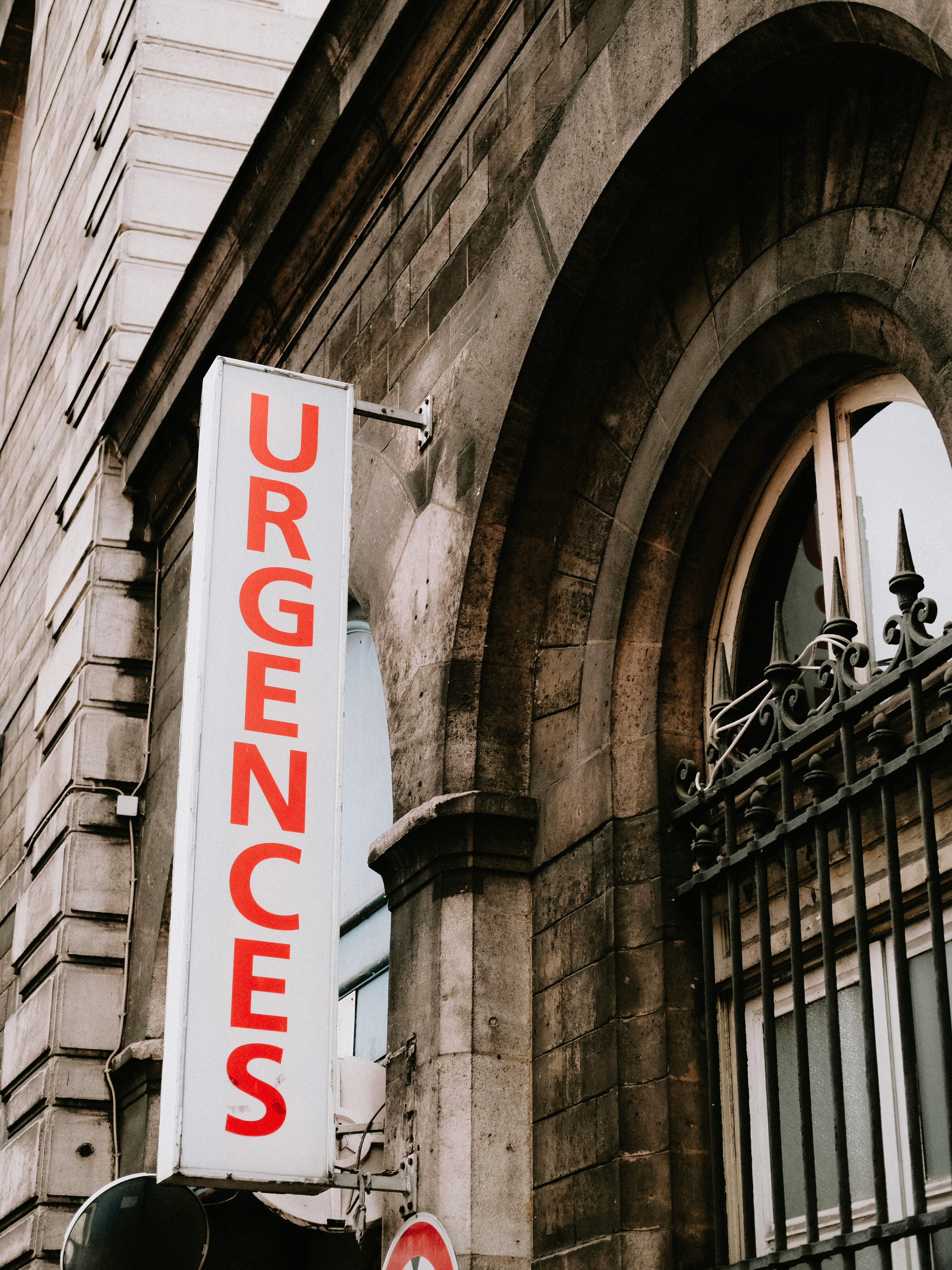
Courtesy: Pexels
This sounds wrong
I want to tell you something that sounds wrong before it sounds right.
The clinic can be dangerous for your health.
Not because physicians are incompetent, and not because hospitals don’t do remarkable things. They do. When you need them, you need them badly, and the quality of attention you get at that moment matters enormously.
But the system built around the clinical visit — the model that treats the appointment as the primary unit of healthcare — is failing in ways we’ve normalized so thoroughly we’ve stopped seeing them.
Let me put some numbers on what “failing” means.
A Johns Hopkins study published in BMJ Quality & Safety estimated that 795,000 Americans suffer death or permanent disability from misdiagnosis every year. Not from bad surgery or hospital infections — from diagnostic error. From a physician not catching what was there to be caught. 371,000 of those people died. Another 424,000 are permanently disabled — brain damage, blindness, lost limbs, metastasized cancer that could have been found earlier.
And here’s what makes that number so uncomfortable: nearly 40% of those harms trace to just five conditions — stroke, sepsis, pneumonia, blood clots, and lung cancer. These are not exotic diseases. They are common. They are pattern-driven. And they are being missed at an 11% error rate in a system that sees a patient for a few minutes, without longitudinal context, under time pressure, and calls it care.
This is what we’ve built. A point-in-time diagnostic instrument that sees patients infrequently, captures almost nothing about what happens between visits, and treats that gap as someone else’s problem.
Your health is dark matter for medicine
The National Academy of Medicine has documented something that should reframe this entire conversation: medical care accounts for only 10-20% of modifiable contributors to healthy outcomes. The other 80-90% — behavior, environment, social circumstances, the slow accumulation of signals that precede a crisis — happens outside the clinic entirely.
Read that again. The place where we have concentrated most of our healthcare infrastructure, investment, and AI development accounts for, at best, one-fifth of what shapes whether a person stays healthy.
The other four-fifths is dark matter. We’re not watching it. We’re waiting for it to become a problem serious enough to schedule an appointment.
Learning from Norway
Norway offers an instructive reference point — not causal, but instructive.
Norway has roughly 37% fewer hospital beds per capita than the average across high-income countries. And yet Norway outperforms the OECD average on all ten key indicators of healthcare access and quality. Its population enjoys life expectancy above the EU average, with a gap between lifespan and healthy lifespan that is roughly half the EU average.
What Norway built is a system oriented around primary care gatekeeping, prevention infrastructure, and keeping people from needing the hospital in the first place. Fewer beds, better outcomes. This isn’t a coincidence — it’s architecture.
The question worth sitting with is: if the US had 37% fewer hospital beds tomorrow, what would have to be true upstream for that to not be a catastrophe? The answer to that question is exactly where clinical AI should be built.
Optimizing broken instruments is bad for your health
I’ve spent time recently watching where healthcare AI investment is going, and the dominant pattern is unmistakable: the industry is racing to optimize the visit.
AI scribes that document faster. Clinical decision support embedded in the EHR. Ambient listening that reduces physician administrative burden. These are real problems. The documentation burden on physicians is genuine and harmful. I don’t want to minimize that.
But here is the problem with the scribe story: it is optimizing a broken instrument. The 10-minute visit with better documentation is still a 10-minute visit. The point-in-time diagnostic moment with AI assistance is still a point-in-time diagnostic moment. We are making the wrong thing more efficient.
And there’s a harder truth underneath this. AI scribes are safe investments because they don’t threaten the visit. They make the existing revenue model faster. They don’t ask whether the fee-for-service architecture — built around billable encounters — is itself part of what’s keeping patients sick.
Visit avoidance does ask that question. Which is why it’s not getting funded at the same rate.
The next 3 years in healthcare AI is not billing
Here is what I think the next three years look like for AI in clinical care, and where I think the actual opportunity lives.
The winners won’t be the companies that use agents to draft documentation. Documentation is a cost center dressed as a product — there’s limited competitive advantage in it, and it does nothing to differentiate a healthcare provider on outcomes.
The winners will be the companies that built the pre-clinic intelligence layer.
What does that mean? It means continuous monitoring that watches the 80-90% of health that happens outside the clinical encounter. It means longitudinal pattern detection that can identify a stroke risk, a sepsis trajectory, an early cancer signal — not in the moment a patient sits across from a physician, but weeks or months before that moment arrives.
It means that when a patient finally does come into the clinic, they arrive with data instead of just symptoms. The physician gets context, not a blank slate. The visit becomes what it should be — a decision point in an ongoing relationship between a patient and their health data — rather than the single fragile moment on which everything depends.
This is technically feasible today. The sensors exist. The monitoring infrastructure exists. The AI capability to detect patterns in longitudinal physiological data exists. What has been missing is the commercial frame that makes this a healthcare priority rather than a wellness product.
That frame is patient safety. Not operational efficiency. Not cost reduction. Not provider satisfaction.
Patient safety — because 795,000 Americans a year are being permanently harmed by a system that wasn’t watching when it should have been.
Make your category - not Epic’s
I want to be honest about what I’m not claiming.
I’m not claiming that visit avoidance will solve the US healthcare system’s structural problems. Fee-for-service reimbursement, fragmented insurance markets, the administrative burden on providers — these are real and require policy solutions that AI alone cannot provide.
I’m not claiming Norway’s outcomes are caused by fewer hospital beds. Norway is a different country with different social infrastructure, different income distribution, different culture. Correlation is not causation, and anyone who tells you the US can simply copy the Norwegian model is selling something.
What I am claiming is narrower and more defensible: a system designed around keeping people out of hospitals can outperform one designed around filling them. And clinical AI that operates outside the clinic — that watches the dark space where 80% of health actually happens — is both technically achievable and commercially underinvested.
The companies that recognize this in the next three years will create new categories of value in the US healthcare market. Not by optimizing the existing model. By making the visit less necessary — and, when it happens, by ensuring the physician sees what they need to see.
That’s a different product. A harder product. And a much more important one.
Join me on Life Sciences Today
I’m looking for 10 cutting edge clinical AI CEOs to join me on Life Sciences Today
We are part of the Healthcare IT network with > 120,000 followers -
This is your opportunity to create a new category of value in the US healthcare market - your category - not Epic’s.
You can pitch me to appear on the pod here
You can see Life Science Today here on Apple, Spotify, Google and all your favorite podcast channels.
Danny Lieberman writes Clear Thinking, a weekly essay on strategy, technology, and decision-making. He is the founder of OpenCRO and a WHO Europe advisor on cybersecurity in digital health.