I once had a client with a CFO who looked like this. Serious and slightly scary.
All I want to know is where I’ll die, so I won’t go there.
This week I write about OutOfCash - our all-time favorites anti-pattern.
Subscribe to get more juicy stories and anti-patterns
👉 If you enjoy reading this post, feel free to share it with friends! Or feel free to click the ❤️ button on this post so more people can discover Clear Thinking. 🙏
Intro
There are wildly varying numbers on how many companies, startups fail because they run out of cash. For example - the U.S. Bureau of Labor Statistics reports that 82% of US businesses fail within 5 years because of cash flow management.
The common-sense solution is to spend less and make more.
But it’s more complex than that.
In this essay, I’ll break down the solution to the OutOfCash anti-pattern into 10 parts.
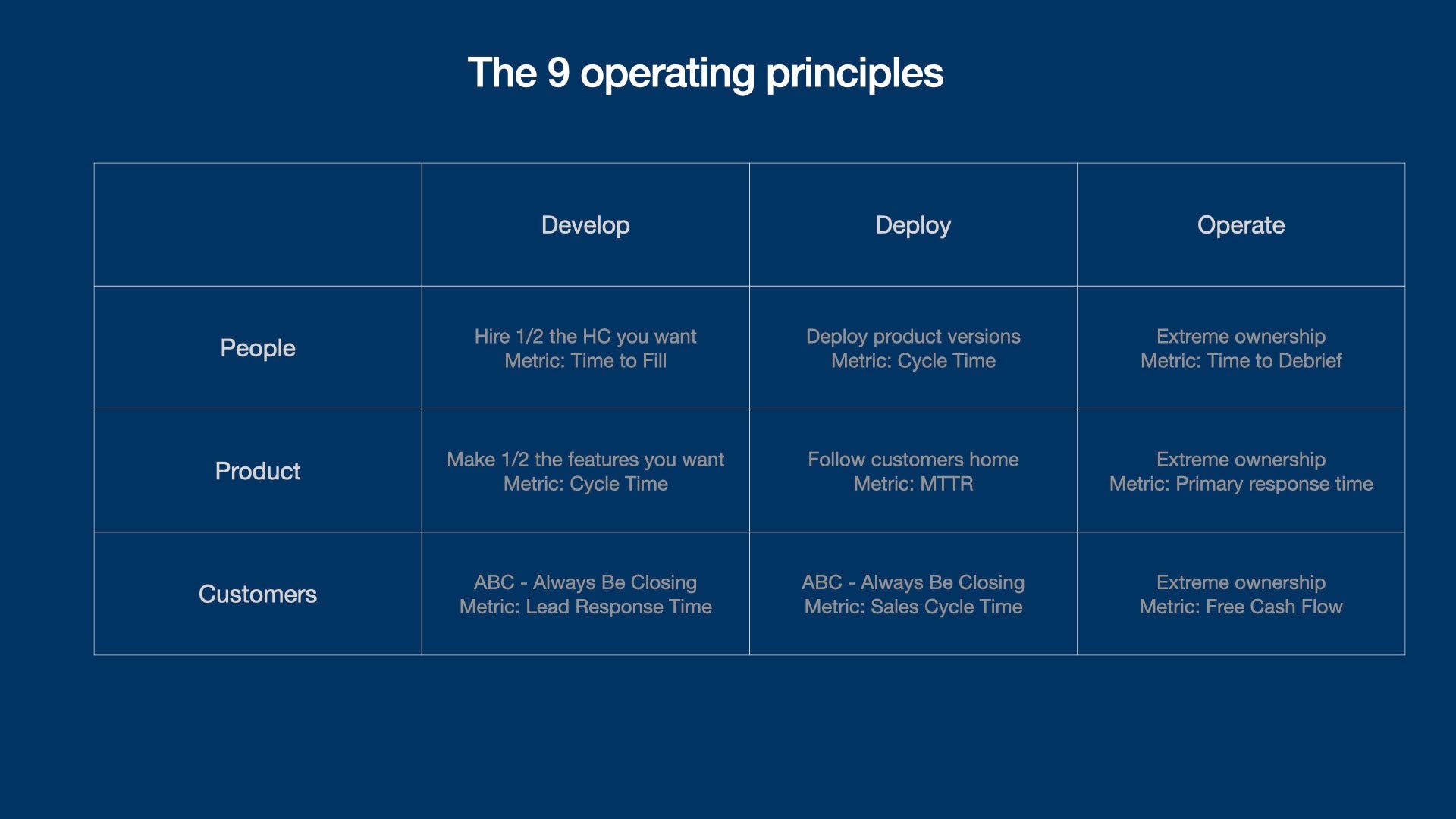
I’ll conclude with 9 operational metrics - FCF + 8 time-based metrics to help keep you on track.
Why is OutOfCash an anti-design pattern?
You can run a profitable business and still fail because you don’t manage your expenses properly. You can scale too fast and spend too much money on salaries. You can purchase too much inventory without the ability to sell it at a profit (or sell it at all).
Solution
Manage your expenses: Like death and taxes, your expenses are more certain than your revenue. It is easy to overspend on cloud, inventory and salaries. Including your own compensation.
How to fix this? Manage cost planning and forecasting inside your accounting application. Your cash-flow forecast will be a standard report. This is important. If you do it manually in Excel, you can make mistakes and be tempted to fudge numbers. Don’t. See Item 10 - “Do not lie”.
Pay attention to your cloud computing bill from AWS, Google Snowflake, Microsoft Azure. You can quickly run up very large bills, if you don’t architect your solution properly and pay close attention daily to cloud consumption. AWS has cost-optimization tools. Use them. Consider third-party cloud cost-optimization.Fix your pricing: Your pricing can be too low and leave you with low operating profit. Your pricing can be too complicated and slow down your sales and customer decision making process.
How to fix this? Deeply understand your unit economics.
Unit economics refers to the direct revenues and costs related to a business model, expressed on a per-unit basis, often with a unit being a customer. It’s crucial for any business as it helps you in decision-making, scaling, and sustainability by understanding key metrics like lifetime value (LTV), customer acquisition cost (CAC), churn rate, and more. This approach allows you to assess profitability at a granular level and plan properly.
Resist the urge to discount. Never give your product away for free.
The worst thing that can happen is a customer will tell you “I love your product, but your pricing is crazy high”. That’s good. People value a Mercedes more than a Ford.Don’t over invest in inventory: If you sell physical products, plan your purchase of inventory carefully.
How to fix this? Forecast revenues. Keep as little inventory on-hand as you can. Zero inventory is best.Forecast Revenues: Overly optimistic revenue projections, particularly in the face of uncertain market conditions or customer adoption rates, can lead to financial strain.
How to fix this? Don’t be optimistic. Forecast FCF - Free Cash Flow instead of revenue. Since FCF includes your expenses, this will provide a grounded forecast for your cash runway. If you have $100 in the bank and your FCF is -$25/week, then you have 4 weeks to live.Say no to bad deals. This is huge, especially with enterprise customers.
Bad deals have 4 red lights. Sense these signals during the process.
Long Sales Cycle: The complex decision-making processes and the need for multiple approvals in enterprise customers can extend sales cycles to 18-24 months. Meanwhile you are burning cash. The deal needs to justify the time and effort.
Special requests: Your product may not fully meet the specific needs or expectations of users inside the enterprise. This can be a make or break decision for a startup. If the required customization adds value to your general customer base, and you can recoup the one-time engineering costs in the deal, then maybe. Be careful, rocky road ahead.
Friction: Enterprise users might be hesitant to adopt new solutions due to potential disruptions to their existing workflows. This can kill you slowly.
Budget: Startups like to discount to get a foot into a new account, what is sometimes called “Land and expand” with a loss leader. This is a bad idea. Your customer needs to believe in the value of your product and have the budget to pay for it. You need to meet your margin targets.
How to fix this? Monitor the process carefully. Every deal must be profitable and drive you on your trajectory of growth. Listen to your gut. If your gut says the customer is bad, walk away.Be flexible: Failure to pivot or adapt in response to market feedback, competitive pressures, or changing customer needs can lead to stagnation and financial issues. What worked last year, may not work this year.
How to fix this? Talk to your customers. Visit them in the office. Buy them lunch.Outsource everything but your core business. Don’t develop your own CRM or your own database. There is an AI-tool for anything today.
How to fix this? Learn constantly and continuously improve the efficiency and quality of your operation.Get paid: It’s not enough to price correctly, close the sale, implement the product and delight customers, you have to collect the money. Companies die waiting to get paid. Enterprise customers can pay in 60, 90, even 180 days. Meanwhile - payroll, cloud and AI providers need to be paid.
Always tell the truth. Any form of lying, bending the truth, delaying the truth is a red flag for any business.
How to fix this? Tell the truth to your team and investors - even if it hurts. It will hurt even more if you try to hide the bad news.Don’t confuse revenue with cash. Revenue is not cash. A signed contract is not cash. ARR is not cash. A purchase order is not cash. An invoice is not cash.
You can be “growing” and still be weeks from death.
How to fix this? Compute and track your leverage - leverage = FCF/costs
At 80% margins, you spend $20 to make $100.At 90% margins, you spend $10 to make $100.
Your cost per sale is HALF.
Two businesses both making $1M.
At 80% margins spends $200k on costs. Leverage = 4
At 90% margins spends $100k. Leverage = 9
The 90% business has an extra $100k FCF to reinvest in growth and 2.25X leverage.
This profit compounds over time.But the solution to cash is really time
And if you want to crush time - you need to measure time - like this:
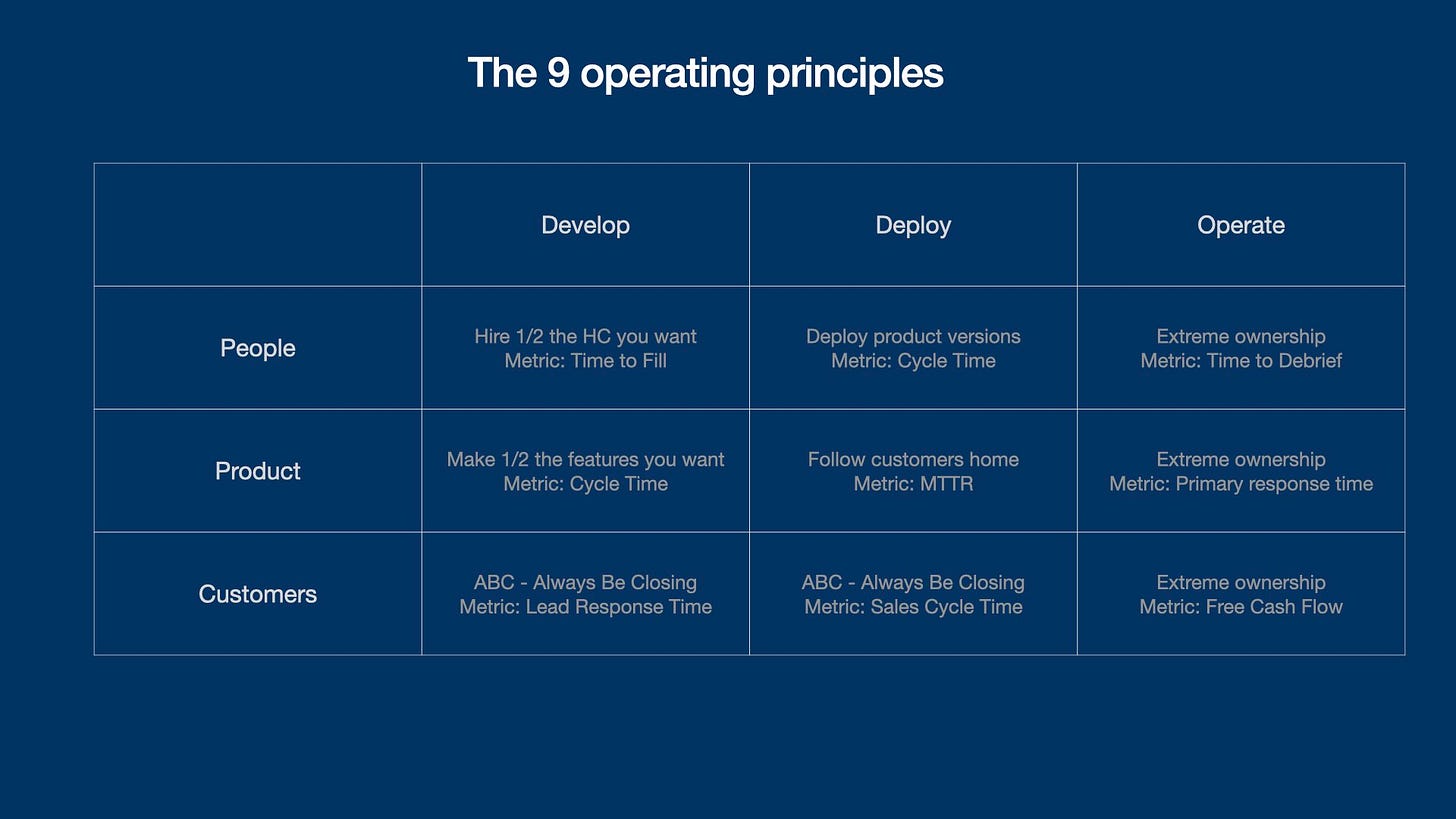
OpenCROThe OutOfCash anti-pattern is central to a theme I think about a great deal in my own work: commercialization is not something to “add later” after you develop a device or drug.
Revenue assurance has to be designed into the company’s value proposition.
That is the premise behind OpenCRO, my latest company. I help medtech teams build development and commercialization programs in which their revenue logic is clear to themselves and their buyers— before they discover, too late, that regulatory progress and commercial readiness are not the same thing.
One of the most common mistakes I see is treating the product label as a regulatory output rather than a commercial input. By the time payers ask, “How do you measure benefit?”, the pivotal trial is often already enrolled and the protocol can no longer be changed.
I have seen variations of this problem across more than 40 medtech commercialization programs in the US - and I hear it from leaders on Life Sciences Today
If that sounds familiar, I’m offering a free 30-minute stress test of where your next deal is most likely to break: FDA review, hospital IT, procurement — or all three.
I’d love to talk to you - grab a time here. No strings.